How Proper Ridge Vent & Attic Ventilation Prevents Winter Ice Dams.
Joe Natarelli — Licensed Massachusetts Roofing Contractor — License ID CSSL-099659
When winter hits New England, thick blankets of snow on the roof might look cozy, but they often hide a silent hazard: ice dams.
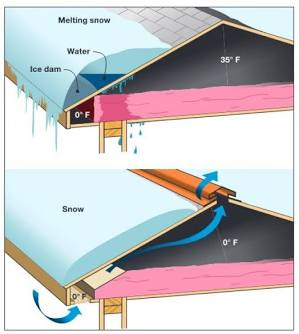
Ice dams form when heat escaping from your home warms the underside of the roof deck, melting the snow above. Water runs down to the cold eave overhang, freezes into a solid wall of ice, and traps subsequent meltwater. Left unchecked, that trapped water backs up under the shingles, leading to damaged insulation, ruined drywall, and costly structural repairs.
The most effective line of defense against ice dams isn't pulling snow off the roof with a rake or tossing chemical pucks into the gutters—it's establishing proper roof and attic ventilation.
Already seeing ice build up along your eaves? Start with our guide to stopping ice dams with short-term fixes and long-term solutions, then come back here for the ventilation side of the fix.
The Root Cause: Warm Roof Decks
To stop ice dams, you have to understand why the roof deck gets warm in the first place:
Attic Heat Loss: Heat escapes from the living space into the attic via unsealed air leaks (bypass areas around light fixtures, attic hatches, or chimney chases) and thin or inadequate insulation.
Uneven Roof Temperatures: The roof area directly above the heated attic space warms up above freezing (32°F / 0°C), melting the snow.
Refreezing at the Eaves: The cold roof overhang at the eaves—which sits outside the heated building footprint—remains well below freezing. As meltwater reaches this cold strip, it freezes, creating a ridge of ice that blocks proper drainage.
How Ridge Vents & Soffit Vents Stop the Cycle
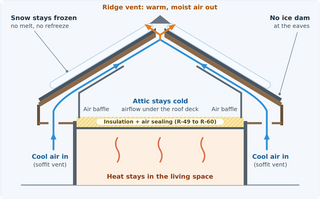
The key to preventing ice dams is keeping your roof deck at the same temperature as the outside air (often called a "cold roof design"). Ventilation accomplishes this by continually flushing warm, moist air out of the attic and pulling cold, dry outside air in.
1. The Intake: Soffit Vents
Located under the eave overhangs, soffit vents intake cool, fresh air from outside. Air baffles (insulation dams) installed between the rafters ensure that attic insulation doesn't block this critical airflow path.
2. The Exhaust: Ridge Vents
Installed along the highest peak of the roof, ridge vents allow warm, moist air rising inside the attic to vent naturally. Because ridge vents run along the entire peak, they provide continuous, even air exhaust across every rafter bay.
3. The Stack Effect
Together, soffit intake vents and a ridge exhaust vent create a continuous thermal siphon. As warm air naturally rises and escapes through the ridge vent, it draws cool air in through the soffit vents. This constant circulation sweeps out escaping house heat before it can warm the roof deck shingles.
Key Benefits of Balanced Attic Ventilation
Eliminates Thermal Hotspots: Keeps the entire roof deck uniform in temperature, preventing the melt-and-freeze cycle.
Reduces Attic Moisture: Cold winter air holds less moisture, but indoor humidity often migrates upward. Proper airflow carries moisture out, preventing frost buildup on rafter nails and mold growth on the sheathings.
Extends Shingle Lifespan: Preventing ice buildup stops water from backing up under the shingle laps, preserving the underlayment and structural framing.
When to Upgrade Your Attic Ventilation
We check attic ventilation on every job. If we find blocked soffits, missing baffles, or too little exhaust, a roof replacement is a natural time to fix it, since the roof deck and eaves are already exposed. That's when we can add or clear soffit intake, install a continuous ridge vent, and set baffles before the new roof goes on. Once meltwater is moving off the roof, it also needs somewhere to go, so clean, properly pitched gutters with leaf guards help it drain away from your foundation.
Frequently Asked Questions About Attic Ventilation and Ice Dams
How does proper attic ventilation prevent ice dams?
Proper attic ventilation maintains a uniform roof temperature by drawing cold outdoor air in through soffit vents and releasing warm air out through ridge vents. This prevents snow on the upper roof from melting and refreezing into ice dams at the cold eaves.
Is a ridge vent alone enough to prevent ice dams?
No. A ridge vent cannot function properly without adequate intake air from the eaves. Ventilation is a balanced system: if you have a ridge vent without clear soffit intake vents (or with clogged soffit openings), air movement stalls, and heat remains trapped in the attic.
Do ridge vents work if they are covered in snow?
Yes. Most ridge vents feature external baffles and weather filters designed to allow air to escape through the sides even when a layer of snow rests on top. As warm air rises to the peak, it naturally melts through thin snow covers to maintain airflow.
Should I cover my roof vents in the winter to keep the house warm?
Never cover roof vents in the winter. Attic ventilation is meant to keep the attic space cold, not warm. Heat preservation should come entirely from your home's air sealing and attic floor insulation layer, not from trapping heat inside the roof cavity.
What attic temperature should you aim for during winter?
Aim for an attic that stays as close to the outdoor temperature as possible. The practical goal is a roof deck that stays at or below freezing (about 30°F) while there is snow on the roof, so nothing melts above your heated living space and refreezes at the eaves.
How can you tell if your attic ventilation system is blocked?
Signs of blocked ventilation include heavy icicle formation along eaves, frost or moisture buildup on plywood sheathing, compressed or misplaced attic insulation blocking soffits, and hot upper floor rooms in summer. If you notice any of these, have the attic inspected before the next heavy snow.
How much attic insulation do I need alongside proper ventilation?
Ventilation works hand-in-hand with insulation. For cold climates (like New England), energy codes generally recommend an insulation value between R-49 and R-60 (approximately 16–20 inches of blown-in fiberglass or cellulose) combined with air sealing to prevent conditioned air from leaking into the attic.
Does adding more attic insulation fix ice dams on its own?
Insulation slows down heat transfer from living areas into the attic, but air leaks and poor ventilation can still cause localized hot spots on the roof deck. Ventilation and air sealing must work together with insulation to reliably stop ice dams.
Contact us Today for a Free No-pressure Estimate